
In May, four leaders from the UW Department of Pediatrics — Dr. Leslie R. Walker, Dr. Maneesh Batra, Dr. Amelie von Saint Andre-von Arnim and Dr. Abigail R. Grant — traveled to Kenya to see two collaborative programs in action: Pediatric Emergency and Critical Care-Kenya (PECC-Kenya) and Resident Education in Advocacy and Child Health (REACH). Together with Kenyan partners, UW faculty are working to improve community health and transform the care and outcomes of critically ill children in Africa.
Unlike traditional global health models, where physicians travel abroad to provide short-term care, these programs are rooted in longstanding partnerships with Kenya’s medical community. Their focus is on strengthening pediatric care systems and training clinician leaders who can drive lasting improvements in care.
“Seeing these exceptional UW and University of Nairobi faculty, residents, and fellows working in the community shines a bright light on what it means to have true purpose and resolve,” said Dr. Leslie R. Walker, chair of the UW Department of Pediatrics. “Every single day, they are saving lives that would otherwise be lost. They do this through sheer expertise, determination, and a fervent belief that all children deserve the chance to reach their full potential.”
Dr. von Saint Andre-von Arnim, who first visited Kenya in 2011 for her fellowship, identified a need for more training in pediatric critical care and was hired to build an international collaboration with the University of Nairobi and local hospitals. The PECC-Kenya fellowship training program launched in 2019 and was the first of its kind in sub-Saharan Africa.
“Until recently there was no other program like this,” said Dr. von Saint Andre-von Arnim. “The global burden of pediatric emergency and critical care in low‑resource settings is enormous, yet the training, skills, and infrastructure to address it are often missing. PECC-Kenya, which includes a two-year fellowship to train African pediatricians to support critically ill children, is a step toward filling that gap — and saving lives.”
The REACH pathway trains residents in global child health, public health, and community engagement. In their third year, residents complete an eight‑week experience in Kisii, Kenya, working on a pediatric ward and with the local public health network on community‑identified priorities such as malnutrition and adverse childhood events. Seattle residents are paired with pediatric residents from the University of Nairobi, fostering mutual learning and a sustained partnership with the Kisii community.
“Year after year, cohort after cohort, we partner with the Kenyan community to support their goals,” said Dr. Walker. “It’s a longitudinal relationship that improves child well‑being while expanding our residents’ understanding of what it really means to improve health beyond the clinic.”
Neonatologist Dr. Maneesh Batra, who helped develop and now co-directs REACH, shared: “The commitment and dedication of our department and Seattle Children’s Hospital to this partnership is so important and valuable for training future leaders in child health. During a very challenging time in the world, having Leslie, our chair, so deeply engaged in understanding and supporting this work is incredibly uplifting for everyone involved.”
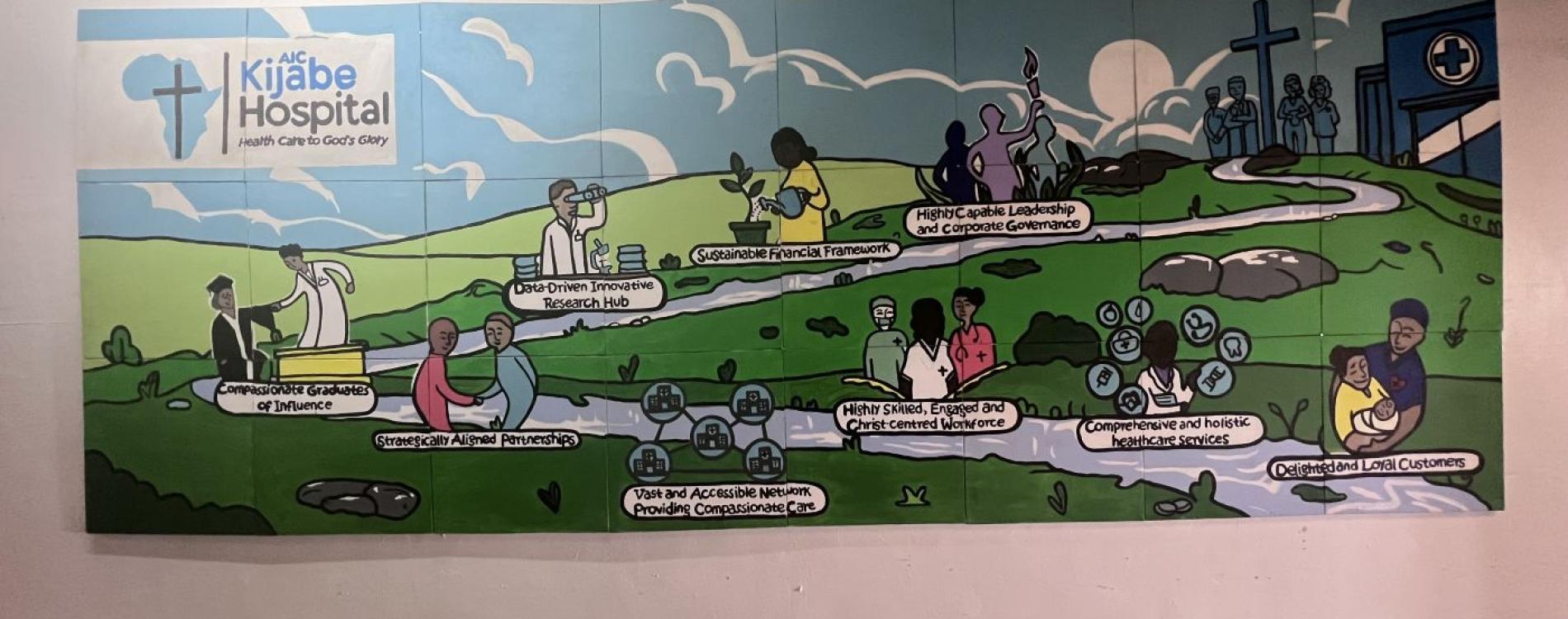
During the visit, the team met with clinical and community partners and toured several hospitals across the region. They participated in faculty discussions, and Dr. Walker presented a grand rounds on substance use and mental health in adolescents globally. They visited Kenyatta National Hospital, the largest public referral and teaching hospital in the area; Gertrude’s Children’s Hospital, a private pediatric hospital; and Mbagathi County Hospital, which serves Kibera, the largest informal settlement in East Africa. They also toured Kijabe Hospital, one of the training facilities for PECC-Kenya fellows.
This October, the UW Department of Pediatrics will host four University of Nairobi residents in Seattle for training in public health, advocacy, clinical care, and research. As well, Dr. Ahmed Laving, Chair of the Department of Paediatrics and Child Health at the University of Nairobi, will present at Seattle Children’s Grand Rounds on October 29.
The team is looking at how to take the learnings from PECC-Kenya and REACH on how to sustain and nurture meaningful partnerships across geographies to deepen and broaden the impact to other pediatric specialty areas. This will include how to leverage cross-cultural learnings and experiences across health systems to support an interconnected and engaged group of tomorrow’s leaders in child health around the world.
“No one becomes a doctor looking for an easy career,” said Dr. Walker. “It is challenging, exhausting, and heartbreaking at times. But those beautiful moments when everything falls into place — when you know beyond a doubt that what you did mattered to a child and their family — that is the fuel that keeps us going across oceans.”
To learn more about these collaborative programs in Kenya, visit the REACH webpage and the PECC-Kenya website.
The PECC-Kenya work was made possible by leadership support from the Divisions of Critical Care and Emergency Medicine, Department Chair Dr. Leslie R. Walker, strong collaborators in Seattle and Kenya, and over 100 volunteers.


