
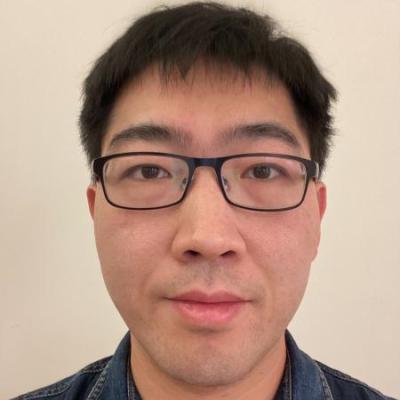
Assistant Professor
Dr. Tang is a principal investigator in the Norcliffe Foundation Center for Integrative Brain Research (NFCIBR) at Seattle Children's Research Institute. Dr. Tang’s research interests focus on experience-dependent effects on brain circuits, behavior, subjective experiences, and mental health. Early adverse experiences are associated with many psychiatric and personality disorders. To investigate their connections, Dr. Tang’s group integrates approaches from artificial intelligence, structural biology, bioengineering, developmental biology, neuroscience, and psychology/psychiatry. A major limitation to brain research is the inability to access all molecular and cellular components of the brain rapidly and comprehensively. To facilitate this, Dr. Tang’s group is developing generalizable strategies to generating conditionally stable nanobodies, which can be applied as sensors to detect and manipulate desired molecules and cell populations. Dr. Tang’s group aims to apply these tools in mice to study the neural and behavioral mechanisms underlying the action learning process. This research integrates state-of-the-art technologies such as wireless inertial sensors, optogenetics, miniscope imaging, fiber photometry and neuropixel recordings in a closed loop system to rigorously investigate how mice home in on the right actions for reward. To overcome limitations of animal models for studying subjective repertoires of individuals, Dr. Tang’s group is applying AI to model psychological structures. The group looks to integrate these multi-level approaches in the understanding of rigid learning patterns (autism, OCD, etc.) and experience-associated psychiatric (PTSD, Borderline Personality Disorders, etc.) disorders.
Education
B.Sc. Honors in Biochemistry at University of British Columbia (2007), M.Sc. in Cell and Developmental Biology at University of British Columbia (2009), Ph.D. in Genetics at Harvard University (2015).
Neurobiology course, Marine Biological Laboratory, Woods Hole, USA (2014)
Methods in Computational Neuroscience course, Marine Biological Laboratory, Woods Hole, USA (2016)